
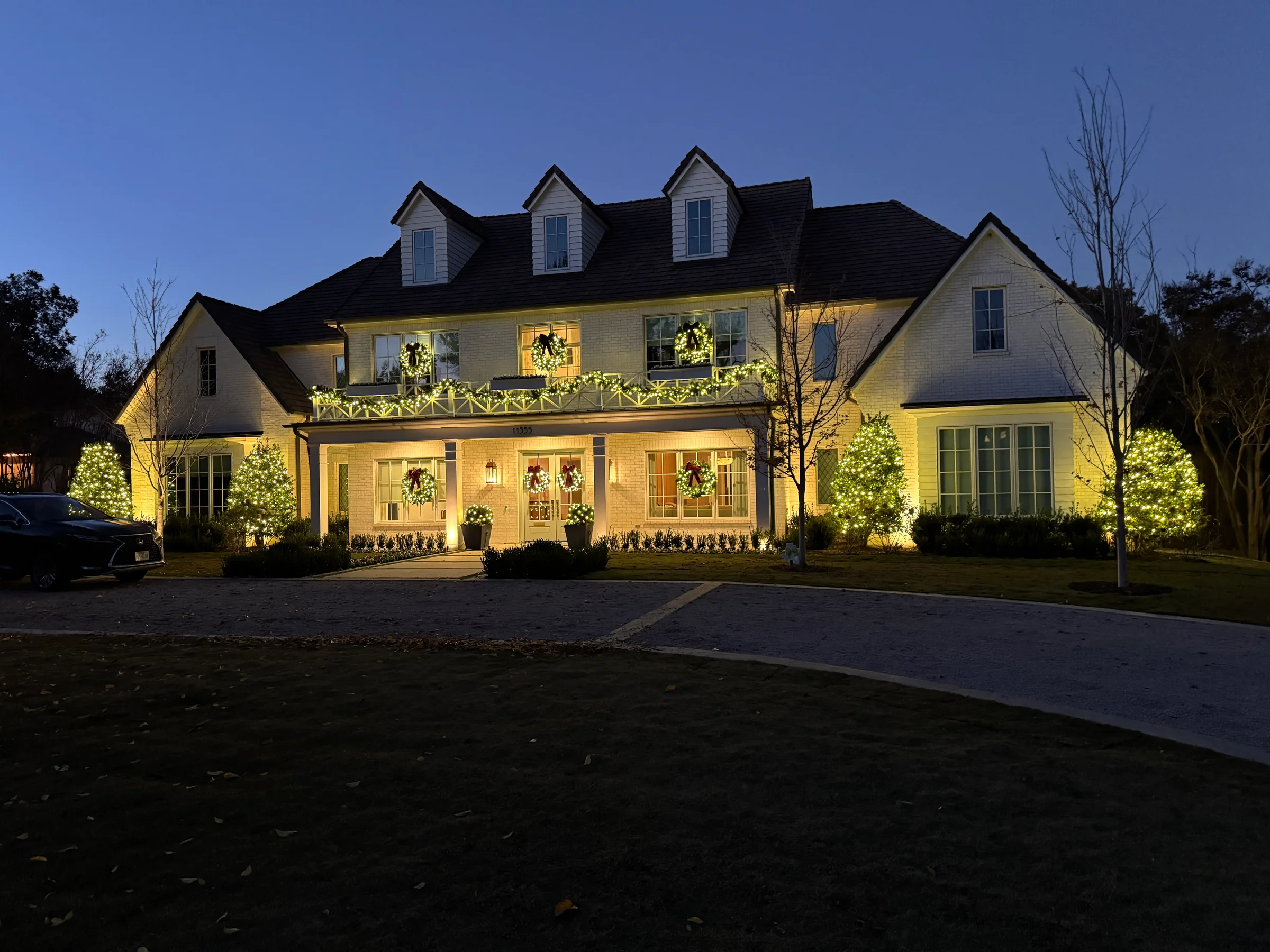
HOA-friendly does not have to mean forgettable. The strongest residential displays usually benefit from restraint: one clear view from the street, consistent spacing, a focused palette, and enough repetition to make the roofline, entry, and landscape read as one composition.
Read the current community standards first
Rules can change, so use the current written standards instead of relying on what a neighbor installed last year. Look for approval requirements, allowed installation and removal dates, color or brightness limits, attachment restrictions, operating hours, and requirements for cords or equipment visible from common areas.
Send the applicable requirements before the display is finalized. An installer can plan around known limits more effectively than revise a finished scope later. If approval is required, leave time for that step before your preferred installation window.
Choose one view to lead the design
Stand where the home is most often seen—at the curb, the neighborhood entrance, or the turn into a shared drive. Decide what should register first. It may be the upper roof peaks, the entry, a large tree, or the line of the home across a corner lot.
Build outward from that focal point. The Midlothian Christmas lighting page shows how rooflines, entries, trees, and walks can support one street-facing composition rather than compete as unrelated features.
A neighborhood-ready design review
- Current written HOA standards and any required approval
- A defined focal view from the street or shared approach
- A limited color palette repeated across the main features
- Brightness and aiming considered from neighboring sightlines
- Installation, operating, and removal dates confirmed in advance
Use color and spacing to create order
Warm white can emphasize architecture with a quiet, classic effect. Multicolor displays feel most intentional when the sequence repeats consistently across roof peaks and related elements. If you mix white and color, give each a role—for example, one on the roofline and the other on a focal tree—rather than changing direction at every feature.
Consistent bulb spacing and clean terminations matter as much as the palette. Ask how lines will end at valleys, corners, gutters, windows, and columns. During the day, clips, cords, garland attachments, and other hardware should also fit the expectations set by the property and community.
Consider brightness from more than the front curb
A display can look balanced from the street and still create glare toward a neighboring window or shared drive. Review ground-level elements, tree lighting, and any directional fixtures from side property lines as well as the main approach. Operating hours can reduce unnecessary overnight light.
Show the installer nearby traffic paths, sidewalks, corner sightlines, and shared spaces. The goal is a display that feels welcoming at your home without creating an avoidable distraction elsewhere.
A cohesive Christmas display earns attention through composition, not by asking every feature to shout.
Plan installation and takedown as part of the design
Share gate procedures, parking limits, shared-drive considerations, irrigation schedules, pets, and landscaping areas that affect access. Do not place private access codes in a public form field; provide sensitive instructions through the appropriate direct channel when scheduling is confirmed.
Confirm the removal window before booking and compare it with the HOA deadline. If travel, an event, or restricted property access falls within that period, flag it early. A polished seasonal display ends with an orderly takedown that respects the same community schedule used for installation.
Bring the property and the rules into one conversation
Send the address, wide curb and driveway photos, your preferred colors, the features you want lit, and the current neighborhood requirements. Lit AF’s Christmas lighting service can include rooflines, trees, entries, and other seasonal elements when they fit the property and approved plan.
Neighborhood planning
HOA-friendly Christmas lighting questions
Should I contact my HOA before booking Christmas lights?
If your property is governed by an association, check the current standards before the design and dates are finalized. Rules may address approval steps, installation and removal dates, brightness, color, attachment methods, or visible cords.
What makes a Christmas display look cohesive from the street?
Choose a clear focal view, repeat a limited color palette, align roofline spacing, and connect major elements such as the entry and one prominent tree instead of treating every feature as a separate idea.
How can I reduce glare toward neighboring homes?
Discuss brightness, aiming, color, operating hours, and the placement of ground-level elements. Review the display from the street and from shared property lines where spill light may matter.
What neighborhood details should I share with the installer?
Share written HOA requirements, gate and access restrictions, parking limitations, irrigation schedules, shared drives, and the installation and removal windows that apply to the property.
How should takedown timing be handled?
Confirm the anticipated removal window before booking and make sure it fits any association deadline. Communicate travel, gate, pet, landscaping, or event constraints that affect property access after the holidays.
Design within the details
Plan a polished Christmas display for your Midlothian neighborhood
Lit AF is based in Midlothian and serves lighting projects across DFW. Send your property photos, color direction, target dates, and any current community standards that should guide the design.
Talk with Lit AF about your display