
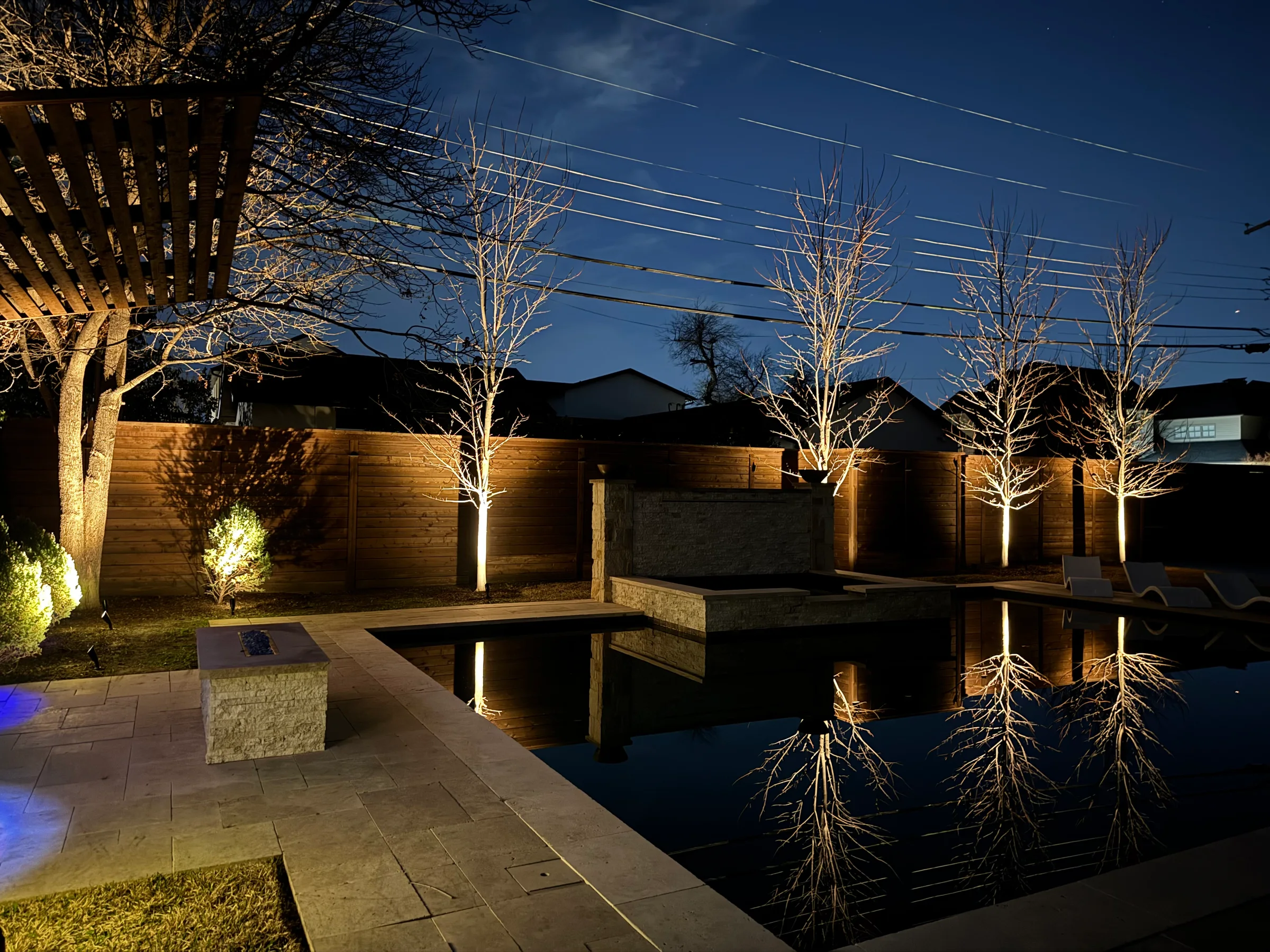
Plants can grow into a beam that used to reach your tree, front walk, or garden wall. Start with a ground-level look in daylight, then compare the same view after dark. The goal is to show what changed before deciding what needs attention.
Start with the view that used to work
Find an earlier evening photo if you have one. Identify the exact feature that has become harder to see: the upper tree, a turn in the path, or part of a wall. From an accessible walkway in daylight, look between that feature and the fixture. Note leaves, low branches, or a shrub that now fills the gap. Stay on firm ground; you do not need to climb, reach into dense planting, or move equipment to collect useful observations.
Separate a blocked beam from a dirty lens or tilted light
Plant growth is one possibility. Lit AF’s Landscape Lighting service also identifies lens debris and shifted fixtures as maintenance concerns. More than one can affect the same view. Look without opening, straightening, or repositioning the fixture.
- Growth in the beam: foliage sits between the light and the intended feature. After dark, nearby leaves may look bright while the feature behind them falls into shadow.
- A covered lens: visible dirt or fallen debris sits on the light’s face. Note it for cleaning review even if the route toward the tree looks clear.
- A shifted fixture: the housing appears tilted or points away from the feature. Mention recent lawn work or changes around its base.
These are clues for a service conversation, not a diagnosis. A dim area by itself does not establish that plants are the cause or that another fixture is needed.
Return after dark from the same safe viewpoint
Use your usual walk or patio rather than stepping through a dark planting bed. Take a wide photo from the daytime position and describe where the light stops reaching. Is the near side of a shrub bright while the tree beyond it disappears? Has light shifted off the path onto the bed? Include a nearby light that still looks as expected in the wide view when possible. Keep the observation about what you can see; leave adjustments to a professional review.
Keep the path and planting access in the discussion
An adjustment should account for how you use and care for the yard. Point out the route to your door, steps, gates, irrigation, mowing edges, and access needed to maintain the plants and lighting. Moving a beam around one shrub deserves another look from the path, not just from beside the fixture. Document the obstruction before cutting plants or moving lights; ask which approach preserves both the planting and the intended nighttime view.
Send a clear before-and-now comparison
- A wide daylight photo showing the fixture, growth, and intended feature together
- A closer view of the visible lens and fixture position, only where safely accessible
- An evening photo from the same wide viewpoint, plus an older view if available
- Your address, when the change appeared, and recent planting, irrigation, or mowing observations
For your Southlake home or a home elsewhere in Dallas–Fort Worth, explain what you want restored rather than choosing a fix in advance. If the conversation expands to lighting new areas or a broader system change, the landscape lighting cost guide explains what to compare in that larger scope.
When the yard grows around your lights
Blocked landscape lighting questions
How can I tell whether plants are blocking a landscape light?
In daylight, look from an accessible path for leaves or branches between the fixture and the feature it used to light. After dark, compare the same view for bright foliage close to the fixture and a shadow beyond it. These observations can suggest an obstructed beam, but lens debris and a shifted fixture may also contribute.
Should I move the light or cut back the plant first?
Document the changed view before altering either one. Ask for a professional lighting adjustment review that considers the plant, the intended beam, the walking route, irrigation, mowing, and service access. A blocked beam alone does not establish which change is appropriate.
What photos should I send when a tree or path looks dimmer?
Send a wide daytime view, an accessible close view showing the fixture and nearby growth, and an evening photo from the same wide viewpoint. Include an older photo if available, your DFW address, when you noticed the change, and any recent planting or lawn work. Explain which tree, path, or feature used to be visible.