
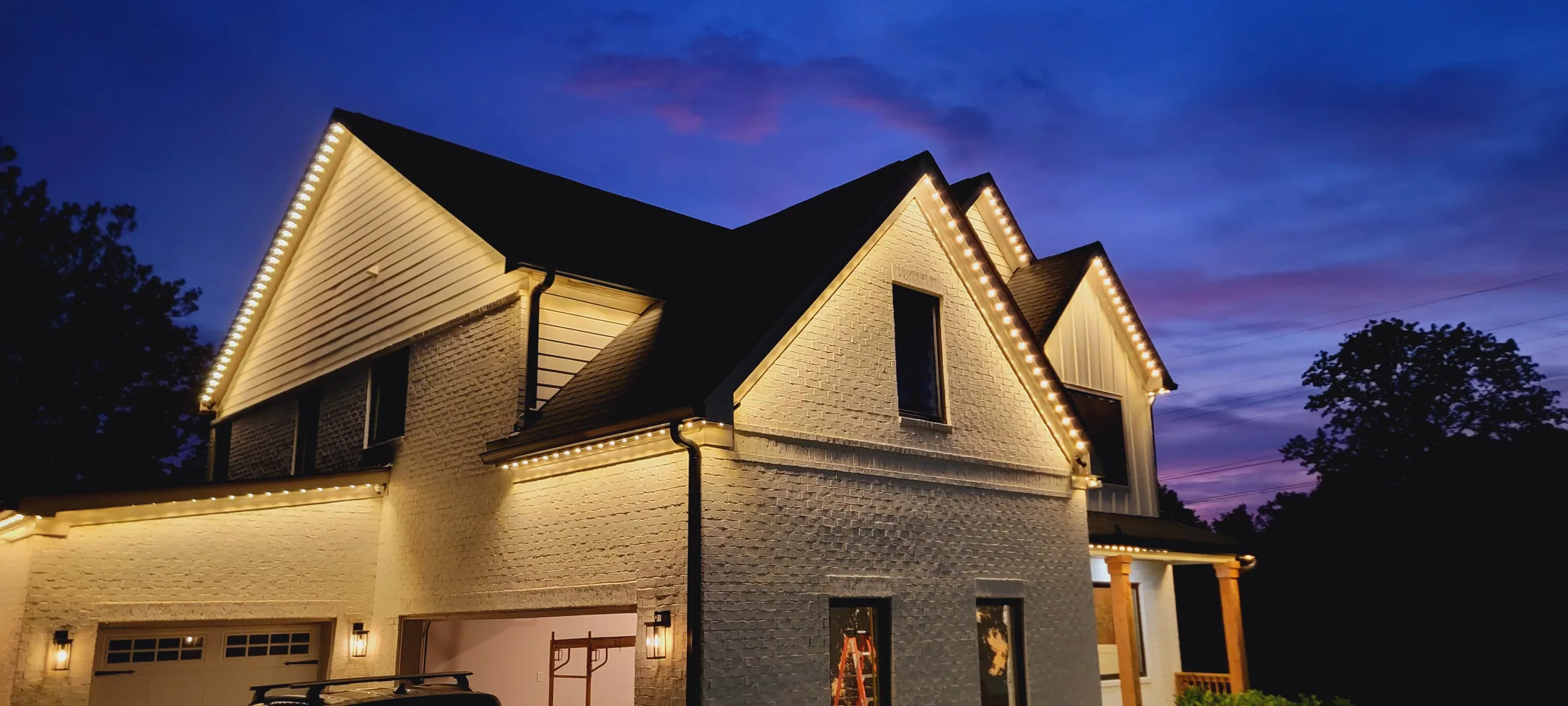
A nighttime photo can help you choose a lighting effect. It cannot tell you whether you will like the hardware beside your trim every afternoon. Before approving permanent outdoor lighting, take time to review the proposed installation in daylight, from the places you actually see your home.
Judge the track against your actual trim
Lit AF’s permanent lighting service includes planning track placement and finish around the fascia, gutters, roof peaks, and street view. Those details deserve more than a quick glance at a color name. Ask to see the proposed track finish beside the surface where it will sit, then step back to judge the overall view.
Look at the track and the visible light faces as separate details. A finish that blends with your fascia does not tell you how much of each fixture you will see from below. Ask the installer to show the proposed profile and position, including what remains visible when the lights are off. Treat “low-profile” as something to evaluate on your home rather than a promise that every part disappears.
Walk the views you use every day
Start across the street, then move toward your driveway and front walk. A straight-on curb view is only one angle. Pause where you park, where you approach the door, and anywhere a side-facing roofline comes into view. At each stop, ask which parts of the proposed track and fixtures you would see without the lighting effect drawing your attention.
For example, a garage return may be a small detail from the street but sit directly in your view when you pull into the driveway. Mark that angle on a photo for the installer. The purpose is to decide which views matter to you before the track position is settled.
Give corners and stopping points a closer look
Follow the proposed route through peaks, corners, height changes, and side returns. Ask where each run begins and ends, how the track will meet at changes in direction, and what connecting wiring or equipment will be visible. A broad roofline photo may not show the detail you care about beside the entry.
Also identify the planned controller location and how equipment will remain accessible for service. If you have upcoming trim painting, gutter work, or roof work, mention it during this review so the lighting plan can be discussed alongside those changes. You do not need to choose mounting methods or design the wiring yourself.
Keep daytime appearance and nighttime coverage in the same plan
If a different track position looks more discreet in daylight, ask the installer to explain what that change means for the illuminated view. Revisit the eaves and peaks you want outlined, where the lighting stops, and the everyday white or color scene you expect to use. Do not assume a placement change leaves the nighttime effect unchanged.
Use Lit AF’s permanent-lighting photos and film to describe the effect you like, then bring the conversation back to your own roofline. A useful design gives you a clear picture of both the unlit hardware and the lit result. It does not require every roof edge to be included simply because it is there.
What to keep with the approved design
- A marked photo showing the included rooflines, starts, stops, and side returns
- The proposed track finish and position, with visible fixtures and transitions identified
- The curb, driveway, and entry views that matter most to you
- The nighttime coverage and everyday lighting look you discussed
Planning lighting for a Southlake home or elsewhere in Dallas–Fort Worth? Send Lit AF your address, a wide daylight photo, and angled views of the roofline. Include any current neighborhood review requirements that apply to your home. Start with the views you want to preserve by day and enjoy at night.
Before you approve the design
Daytime appearance questions
Are permanent outdoor lights invisible during the day?
Low-profile does not mean invisible from every angle. Track finish, roofline shape, and viewing position affect what you see. Review the proposed track and light profile with the lights off from the street, driveway, and entry before approving the design.
What if I like the nighttime lighting but dislike the daytime track?
Ask the installer to revisit the proposed finish and placement before installation. Review any revised position against the same nighttime coverage goals so you understand the tradeoff. Confirm the final location and visible details on a marked photo or in the written scope.
Can nighttime project photos replace a daytime design review?
No. They help you describe the rooflines and lighting effect you like, but they do not establish how unlit track, fixtures, or transitions will look on your home in daylight. Ask to review the actual proposed profile and finish alongside your exterior.